
 English
 Deutsch
 Français
 Español
 简体中文

What Is the Manta Point Dive Site in Nusa Lembongan?
November 15, 2026
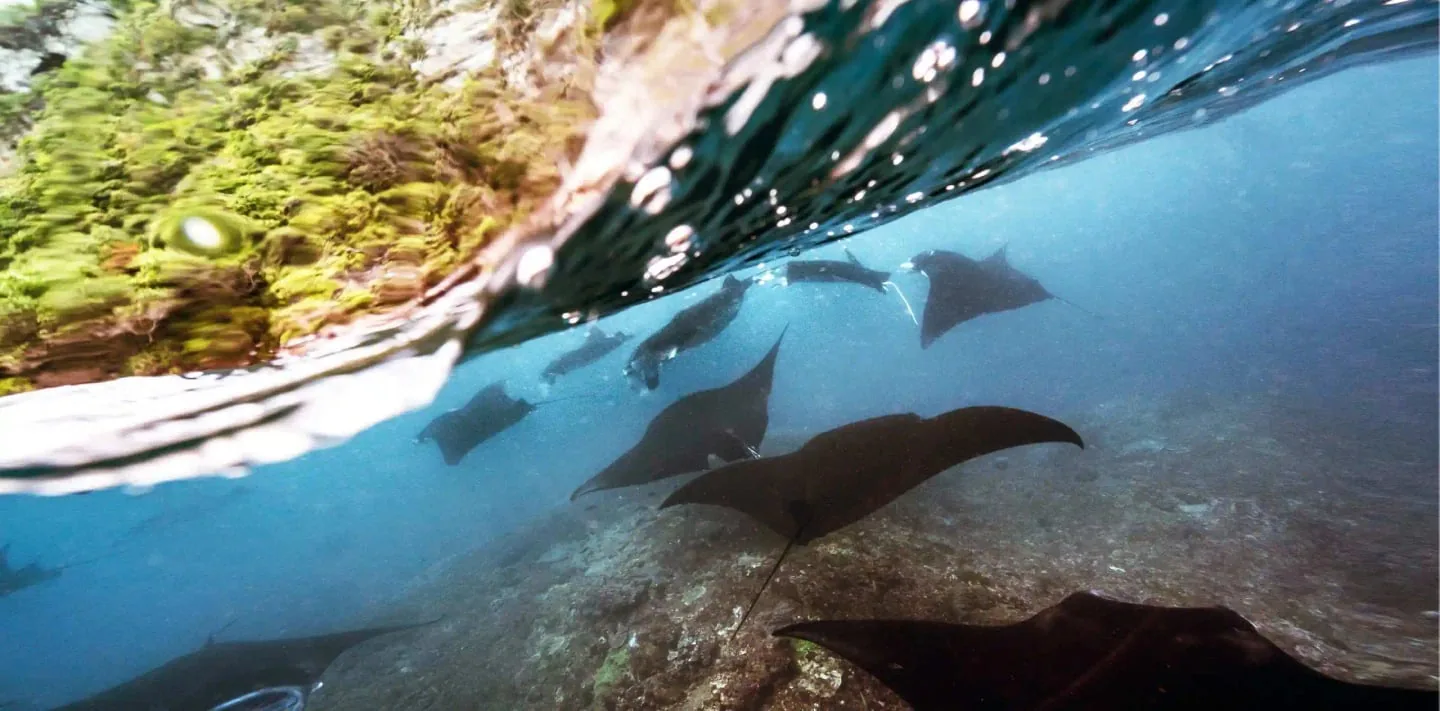
A site guide to Manta Point for divers based on Nusa Lembongan, from the boat ride to the cleaning stations.
Manta Point is the manta ray cleaning site that divers from Nusa Lembongan reach by boat. It lies off the exposed south coast of Nusa Penida, in a sandy bay about 10 to 25 m deep, where adult reef manta rays come to be cleaned. The current is usually light. Swell from the Indian Ocean is the real limit, and on rough days the boat goes elsewhere.
From our dive center in Jungut Batu, the ride to Manta Point takes about 45 minutes, which makes it our farthest site. This guide covers what you need to know about the site itself: depth, surge, the boat day, conditions through the year and whether to dive or snorkel for mantas from Lembongan.
What Are the Key Facts About Manta Point From Lembongan?
The conditions come from our dive site card, and the prices come from our price list. Check the price list for current rates before you book.
How Deep Is Manta Point?
Manta Point is a shallow site by local standards. Most dive sites around the three islands slope to 40 m or more, but this bay stays within recreational limits for almost every certified diver.
• The bay: a sandy floor that runs from about 10 m down to just over 25 m.
• Where the mantas are: the cleaning stations sit on the rocky areas in the bay, where cleaner fish wait for passing mantas.
• Why depth is rarely the issue: An extensive plateau of coral and sand slopes gently downward. Cleaning stations are distributed throughout the plateau, where you will spend most of the dive.
Because the dive is shallow and mostly still, your air usually lasts. Cold water and surge decide how long you stay comfortable.
How Strong Are the Current and Surge at Manta Point?
The current at Manta Point is usually none to medium. It is not a drift dive like the north coast sites closer to Lembongan, such as Mangrove or Toyapakeh. The challenge here is surge, the back-and-forth push of ocean swell rolling in from the south.
• In the water: surge moves you forward and back with each wave. Stay a little higher above the bottom and use your fins, not your hands, to hold your place.
• On the boat: the crossing along Penida’s south coast can be bumpy when the swell is up. Take seasickness tablets before you leave if you need them.
• On the schedule: if the swell is too big, the captain and guides choose another site. On those days, we take you to one of the other Nusa Penida dive sites instead.
If seeing mantas is the main reason for your trip, plan more than one dive day. That way, one rough morning does not cost you the site.
What Does a Manta Point Dive Day From Lembongan Look Like?
Manta Point is a boat dive only. There is no beach or shore entry, and the boat ride is part of the day.
• Morning start: you arrive at the dive center early, around 7:30 am, to set up your gear.
• Departure: the boat leaves Jungut Batu around 9:00 am.
• Crossing: about 45 minutes along the coast to the south side of Nusa Penida.
• Briefing: your guide explains the site, the surge and the cleaning station rules on the boat.
• Entry: a back roll from the boat, then a group descent with your guide.
• Second dive: usually Crystal Bay, about 20 minutes from Manta Point by boat.
Most Manta Point days are morning trips. The sea is often calmer early, and you are back on Lembongan by early afternoon.
How Should You Behave at the Cleaning Stations?
Mantas come to the cleaning stations to have parasites and dead skin removed by small fish. If divers crowd them, they leave. Good behavior keeps them coming back, and it gives you a longer encounter.
• Stay to the side: never block the space above or in front of the station.
• Keep your distance: stay at least 3 m from the nearest manta, and 10 m when it is not cleaning or is close to the reef.
• Do not chase: let the manta come to you, and never approach from behind.
• Stay low and still: settle on the sand away from coral, or hover in place.
• Breathe gently: a big burst of bubbles can make a manta turn away.
• Touch nothing: not the mantas, not the coral and not the rock.
• Follow your guide: never get closer than your guide does.
These rules follow the manta code of conduct we use on every dive. You can read the full code, along with the size, life cycle and threats facing these animals, on manta rays in Nusa Lembongan.
What Are Conditions at Manta Point Like Month by Month?
Mantas live around the islands all year, so there is no month without them. What changes through the year is the weather, the water temperature and the number of boats.
• Best balance: May and June often combine dry weather with fewer boats than peak season.
• Coldest months: July to October. Bring or rent a thicker wetsuit.
• Quietest months: the wet season, if you can accept the odd lost day to weather.
We do not publish a sighting percentage for Manta Point, so we do not quote one. Mantas are seen there throughout the year, but no dive center can promise them on a given dive.
Should You Dive or Snorkel to See Mantas From Lembongan?
You can see manta rays from Lembongan either way, but not at the same site.
Manta Bay is shallower and more sheltered, and young male mantas feed there all year. Manta Point is deeper and more exposed, so it works best as a dive. If your group has divers and non-divers, ask us about combining both on the same trip.
What Skill Level Do You Need for Manta Point?
You do not need an advanced certification for Manta Point. These three things make a bigger difference:
• Buoyancy control: it keeps you off the reef when the surge pushes you.
• Warmth: a 5 mm wetsuit, or thicker, for July to October.
• A spare day: the swell can close the site, so give yourself a second chance.
Frequently Asked Questions
How long is the boat ride from Lembongan to Manta Point?
About 45 minutes from Jungut Batu. It is our farthest site, and the crossing can be bumpy when the southern swell is up.
Is Manta Point a drift dive?
No. The current is usually none to medium, and you stay near the cleaning stations. Surge, not current, is the main challenge.
How cold is the water at Manta Point?
It ranges from about 18 to 25°C, with an average of about 23°C. The coldest months are July to October, when a 5 mm wetsuit or thicker is a good idea.
Can you snorkel at Manta Point?
Manta Point is mainly a dive site because it is deeper and more exposed. For snorkeling with mantas from Lembongan, we use Manta Bay, where smaller mantas feed near the surface.
Is there an extra fee for diving Manta Point?
Yes. A remote-site fee of IDR 150,000 per person applies on top of the fun dive price, because of the distance from Lembongan.
Are manta rays at Manta Point all year?
Yes. Mantas are seen there in every month. Weather and swell, not the season, are what most often stop a Manta Point dive.
Conclusion
Manta Point is a shallow, sandy cleaning site where adult manta rays come in from open water, about 45 minutes from Lembongan by boat. Light current makes it suitable for most divers, while surge and cool water ask for good buoyancy and the right wetsuit.
Plan two dive days, pack for cold water and give the cleaning stations space. The mantas will do the rest.
Join our mailing list today
Join our community! Subscribe to our blog for fresh content delivered straight to your inbox
Be part of our community and stay updated with the latest insights! Subscribe to our blog for fresh news, tips, and insights delivered straight to your inbox. Join us on our journey and be the first to know about our updates, events, and special offers. Don’t miss out!