
 English
 Deutsch
 Français
 Español
 简体中文

Which Scuba Diving Course Should You Take in Bali?
November 15, 2026
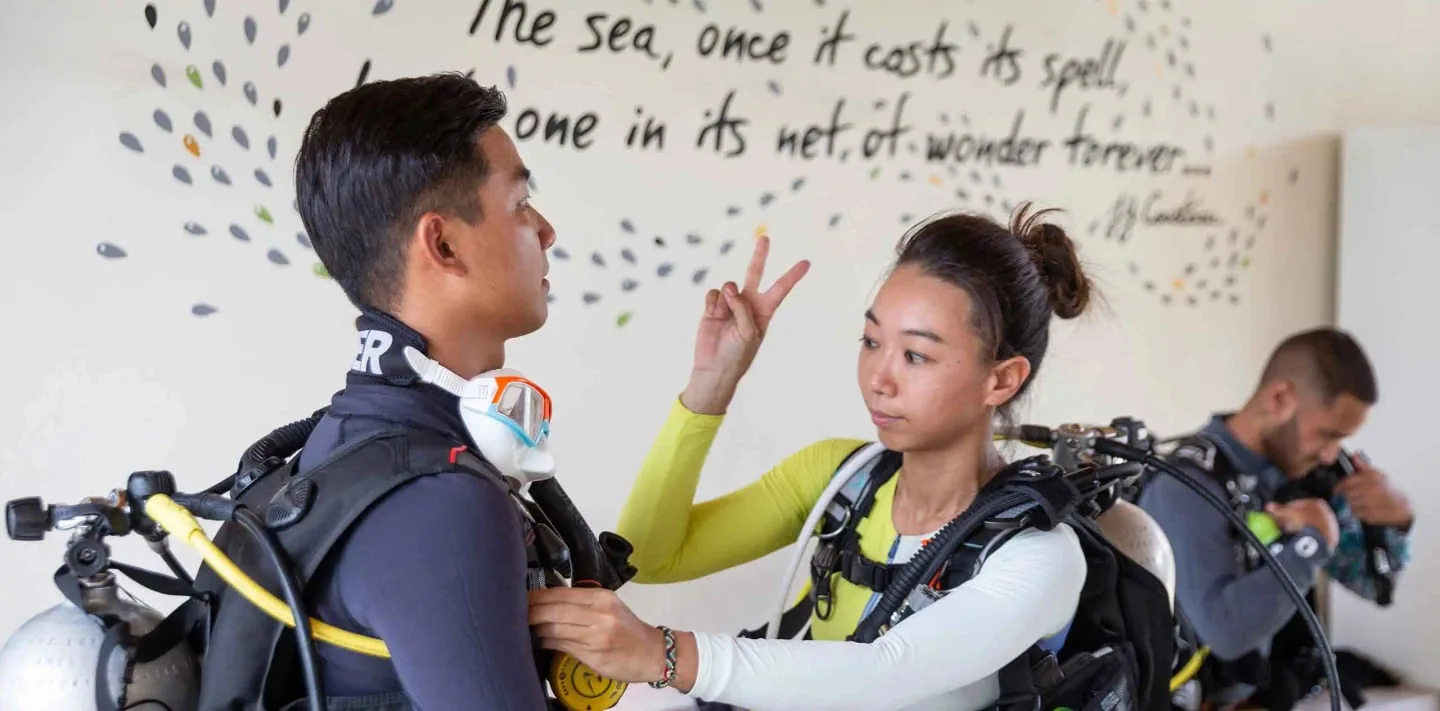
A decision guide to Bali’s PADI courses by experience, time and budget, so you book the course that fits your trip.
The right scuba diving course in Bali depends on three things: what you have done before, how many days you have and how much you want to spend. If you have never dived, start with a one-day try dive or go straight to the three-day Open Water course. If you are already certified, the Advanced Open Water course is the usual next step, followed by specialties and the Rescue Diver course.
Below, we match each course to the diver it suits, using the durations and prices we publish for our dive center on Nusa Lembongan. The PADI courses follow the same standards anywhere in Bali, so the same choices apply wherever you learn.
Which Course Fits Your Experience?
Start with where you are now. This table shows the usual first choice for each type of diver.
If you are between two options, choose the course you can finish without rushing. A course squeezed into too few days is harder to enjoy and harder to learn from.
Should You Try Diving Before You Commit to a Course?
If you are not sure you will enjoy breathing underwater, try it first. Discover Scuba Diving is a short experience, not a certification course. You learn the basics in the pool, then make two ocean dives beside an instructor.
It suits you if:
• You have never dived and want to see if you like it.
• You have only one day free on your trip.
• You are traveling with divers and want to join them once.
Our Discover Scuba Diving takes one day or two half days, and the minimum age is 10. If you love it, the dives can be a first step toward the Open Water course.
What Course Should You Take If You Only Have Two Days?
The Scuba Diver course is a shorter certification for people with limited time. It covers part of the Open Water course and takes about two days.
Once certified, you can dive to 12 m under the direct supervision of a PADI professional. You cannot dive on your own with a buddy, but you can join guided fun dives on later trips.
• Good for: short holidays, and divers who will always dive with a guide.
• Not ideal for: anyone who wants to dive independently or go deeper than 12 m.
• Later: you can upgrade to Open Water without starting again.
Which Course Lets You Dive Anywhere in the World?
The Open Water Diver course is the full beginner certification. It is the course most new divers take, and the one we recommend if you plan to dive again after this trip.
On our course, you study online before you arrive, train in the pool, then make four ocean dives over two days. The first two go to a maximum of 12 m, and the last two to 18 m. The course usually takes three days, and the minimum age is 10.
Once certified, you can dive to 18 m with a buddy, without a professional, anywhere in the world. You can also rent equipment and get air fills.
If you have less time in Bali, ask about a referral. You can do the theory and pool training at home, then finish the ocean dives with us. See how the course works on our Open Water course in Lembongan.
What Should You Take Once You Are Certified?
For most Open Water divers, the next course is Advanced Open Water. It is not about being an expert. It is about trying new types of diving with an instructor and building confidence.
The course takes two days and includes five adventure dives. Two are required: deep diving and underwater navigation. You choose the other three, and around Lembongan, drift diving and buoyancy are popular choices. After the course, most divers can dive to 30 m.
This matters in Bali. Many of the best sites, including the mola cleaning stations at Crystal Bay, sit below the 18 m limit of an Open Water Diver. You can see what each dive covers on our Advanced Open Water course page.
If you only have one day, the Adventure Diver course gives you three adventure dives that count toward Advanced Open Water later.
Which Specialty Helps Most Around Lembongan?
Specialties focus on one skill. Around the Nusa Penida channel, three are especially useful:
• Drift Diver: most dives here move with the current, so learning to plan and control a drift dive pays off on every trip.
• Deep Diver: it extends your training for dives toward 40 m, useful for the deeper parts of sites such as Crystal Bay in mola season.
• Enriched Air Nitrox: it lets you use air with more oxygen, which gives you longer no-decompression limits on repeat dives.
Sidemount is a good choice if you want a different way to carry your tanks. You can compare them all on our page of PADI specialty courses.
When Does the Rescue Diver Course Make Sense?
The Rescue Diver course teaches you to prevent problems, manage them and help another diver in trouble. Many divers call it the most useful course they have taken, because it changes how you watch your buddy and yourself.
You need Advanced Open Water and a current Emergency First Response (EFR) certificate, covering CPR and first aid, from within the last 24 months. If you do not have one, add the one-day EFR course first.
The Rescue course takes three days, so plan four days with EFR. It is also the step before the Divemaster course. Learn more about our Rescue Diver course.
How Much Time and Money Does Each Course Take?
This table lists our published durations and prices. Use it to match a course to the days and budget you have.
Prices can change, so check the current rate before you book. If you plan to take more than one course, ask us about combining them.
How Do You Fit a Course Into a Short Holiday?
A few simple steps help you get more from the days you have.
• Start the theory at home: online study for the Scuba Diver and Open Water courses saves classroom time on the island.
• Plan a free day before you fly: do not dive in the 24 hours before a flight. Keep your last day for the beach.
• Allow for the weather: the sea can change, so a spare day keeps your course from feeling rushed.
• Combine courses wisely: Open Water followed by Advanced Open Water works well over five or six days.
Frequently Asked Questions
What is the best scuba diving course for beginners in Bali?
The Open Water Diver course is the best choice if you want to keep diving. If you only want to try it once, Discover Scuba Diving takes a single day and needs no experience.
How long does it take to get certified in Bali?
The Open Water course usually takes three days. The shorter Scuba Diver certification takes about two days, but it limits you to 12 m with a professional.
Can children take a diving course in Bali?
Yes. The minimum age is 10 for Discover Scuba Diving, Scuba Diver and Open Water, and 12 for Advanced Open Water and Rescue Diver.
Do you need to be a strong swimmer to learn to dive?
You need to be comfortable in the water and able to swim and float. You do not need to be a fast or strong swimmer.
Should you take Advanced Open Water in Bali?
Yes, if you plan to dive Bali’s deeper or current-heavy sites. It raises your limit to about 30 m and trains you in skills such as drift diving.
Can you do a diving course in Bali in the rainy season?
Yes. Courses run all year. Rain is more likely from January to April, so allow a spare day in case a boat day is moved.
Conclusion
The right course in Bali is the one that matches your experience, your time and your plans after the trip. Try a single dive if you are unsure, take Open Water if you want to dive again, and add Advanced Open Water and specialties once you are certified.
Count the days you have, choose the course that fits them, and leave room for one more dive.
Join our mailing list today
Join our community! Subscribe to our blog for fresh content delivered straight to your inbox
Be part of our community and stay updated with the latest insights! Subscribe to our blog for fresh news, tips, and insights delivered straight to your inbox. Join us on our journey and be the first to know about our updates, events, and special offers. Don’t miss out!